Events and Media
What Your Audience Should Leave With After a Keynote
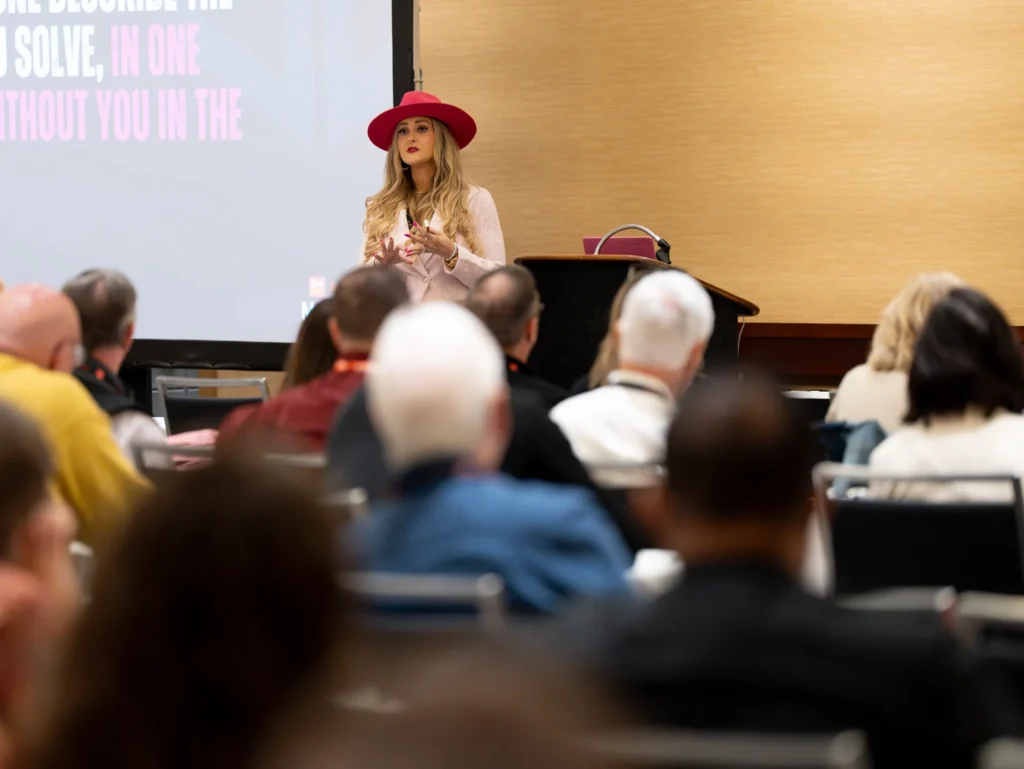
Your audience should leave a keynote with one idea they can use when they get back to work, a reason to care about it, and a first move they can picture taking.
Your speaker brief should name that takeaway. It gives you a way to judge the talk before you book it.
As an event planner, you want a room that is engaged. I want that, too. I want people to see a possibility, find some courage, and get excited about what they can do.
I also want the idea to have somewhere to go after the applause.
Ask what someone in this particular audience will be able to try. The answer should fit the work they do and the choices they can make. A new employee and a company owner need different ways to use the same idea.
Look for a Takeaway With a Job
A takeaway has a job when someone can use it in their own work. Here is what that looked like after a training session.
After a training session, our team followed up with attendees by email. One attendee described a change in how he quoted a deck.
Before, he would have quoted the basic package. This time, he showed the fuller package, including the railing, and then worked through the other options with the customer. He reported selling the middle package.
The useful part of that feedback was how specific it was. He had taken something from the session and used it in a customer conversation. We could see what he had tried.
A keynote is a different format from a training session, but the same test applies. Can people picture where they will use the idea?
Here is one way a session could build that in with my Unmistakable framework: Find Your Edge. Make Your Move. Build Momentum. This is a sample activity.
Each person names a strength they use at work. They add a detail that experience has taught them to notice. Then they name whom that could help and choose a task where they will use it.
A simple takeaway page could hold:
- The strength I can put to work.
- The detail my experience helps me see.
- The person or task that needs it.
- The move I will make and when I will make it.
That gives the idea a place in someone’s week. The page does not need to hold every idea in the talk. It needs to help the person use the one that matters most.
Fit the task to the people in the room. Senior leaders may use it to rethink a role. Someone new to the work may use it to ask for a task they can help with.
Neither needs to share something personal with the whole room for the exercise to count.
Plan for the Day After
Talk with the speaker about the support the idea needs. A short practice during the session can help people see how it works. A simple resource can help them recall it later. A manager may need to make room for the action when the team returns.
Plan the follow-up, too. Ask attendees what they tried, not just whether they liked it.
Agree on what the event can provide. A keynote cannot promise that every person will change a habit.
A keynote can give people a clear idea, a reason to care, and a sound first move.
That focus also helps shape the talk. A story, slide, or exercise earns its place when it helps this group understand and use the point.
For your next speaker brief, add one line: “When attendees return to work, we want them to be able to ___.”
Use that line to guide the conversation with the speaker. Let the session build toward an action the audience can picture taking.
Common Questions
What should a speaker brief include?
The audience, the purpose of the session, and one line that names the action you want: “When attendees return to work, we want them to be able to ___.” Use it to guide your conversation with the speaker.
What support does the takeaway need after the event?
A short practice during the session, a simple resource people can return to, and a manager who makes room for the action when the team gets back.